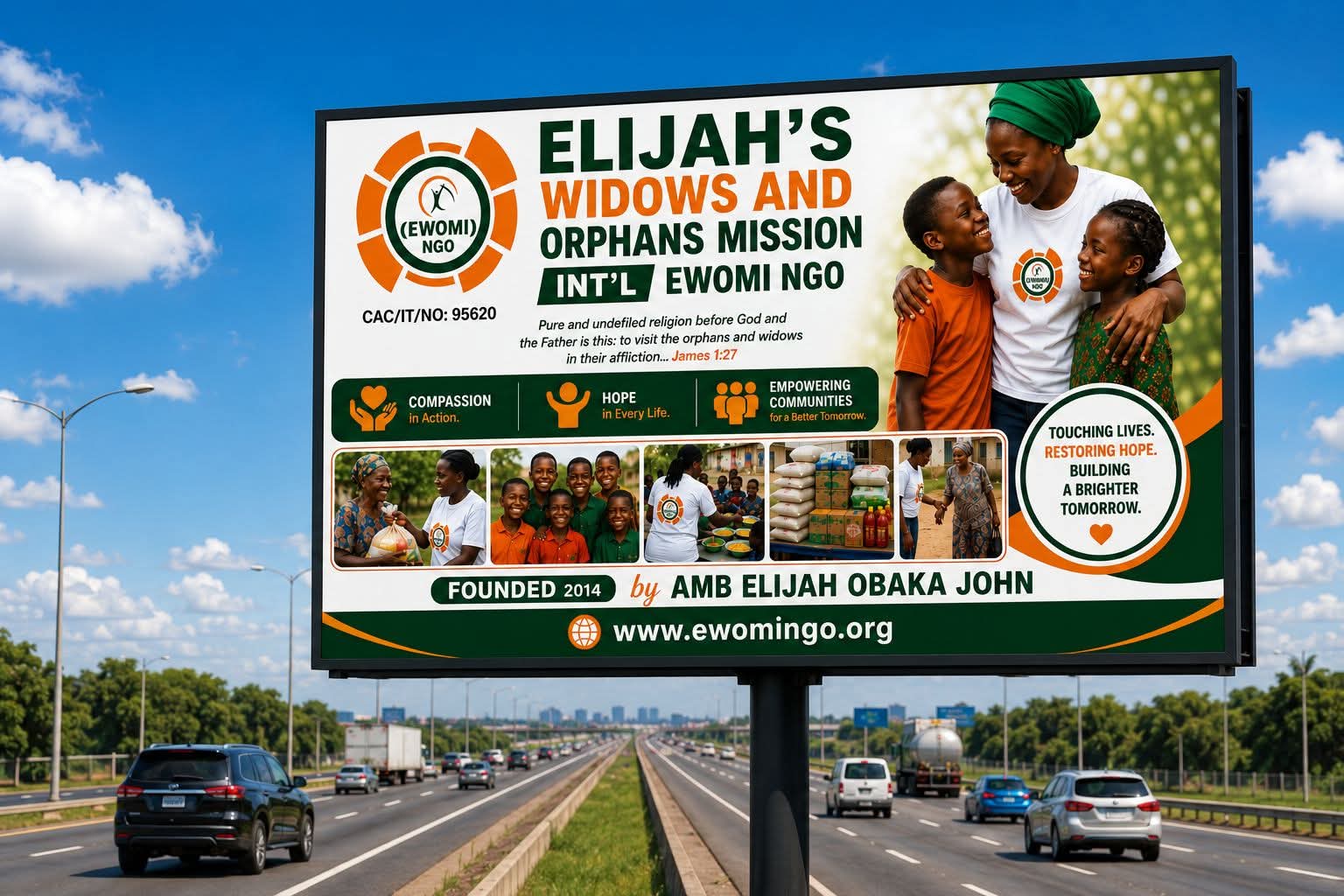
EWOMI LOGO
INTERPRETATION
1. The Circular Shape The circular design represents unity, completeness, continuity, and inclusiveness. It signifies that EWOMI embraces widows, orphans, vulnerable children, and disadvantaged people without discrimination. It also reflects the organization's commitment to providing lifelong support and hope.
2. The Orange Outer Segments The orange segments symbolize:
• Compassion and love
•Hope for a brighter future
• Energy and action
•Humanitarian service
?• The separated segments also represent the different communities, partners, volunteers, and supporters coming together as one to achieve a common purpose.
3. The Green Inner Ring Green is the color of:
• Life and growth
• Renewal and restoration
• Prosperity and empowerment
• Peace and sustainability
? The green circle signifies EWOMI's commitment to restoring dignity, empowering vulnerable people, and creating sustainable livelihoods.
4. The Human Figure The person with raised arms in the center represents:
• Hope restored
• Victory over hardship
• Empowerment
• Joy and gratitude
? It symbolizes every widow, orphan, and vulnerable person whose life has been transformed through the mission's support.
5. The Orange and Green Curved Lines These curved lines surrounding the human figure represent:
• God's protection and grace
• Love embracing humanity
• Unity between compassion and empowerment
? They also illustrate the organization's holistic approach to caring for people physically, emotionally, spiritually, and economically.
6. The Name "EWOMI NGO" The name boldly identifies the organization and reflects its commitment to being a trusted humanitarian organization dedicated to serving widows, orphans, and vulnerable communities.
OVERALL MEANING
?• The EWOMI NGO logo portrays an organization that brings hope, love, empowerment, and transformation to widows, orphans, and vulnerable people. It reflects a mission built on compassion, unity, sustainable development, and the belief that every person deserves dignity, opportunity, and a brighter future.


Comments (0)
Be the first to leave a comment!
Leave a Comment
Your email address will not be published. Required fields are marked *